ICE PACK

Tuesday, November 13, 2018

Points-Of-Cold


CryoMAX® “Points-of-Cold” Technology is the most advanced cold therapy on store shelves today – a patented, science-based system that utilizes non-toxic, latex-free materials and works for up to 8 hours at doctor-recommended therapeutic temperatures.
CryoMAX® “Points of Cold” Technology is uniquely configured not as a solid block of frozen liquid, but as small, rounded, frozen water-filled capsules arranged in rows and separated by space in which a non-toxic, non-freezing formula allows for body-conforming applications.
Unlike conventional cold packs that temporarily mask pain and inhibit healing by freezing underlying tissue and blood vessels, CryoMAX® “Points of Cold” Technology absorbs heat and pain without interfering with the body’s natural healing processes.
Simply put, CryoMAX® “Points of Cold” is the most advanced cold therapy technology on store shelves today.
Traditional ice packs trap heat inside the injury…
How Ice Packs WorkTraditional cold packs – folk remedies like bags of ice cubes and boxes of frozen peas – freeze large areas, masking pain for brief periods while trapping heat, neutralizing the body’s natural healing processes, and prolonging injury time.
CryoMAX® “Points of Cold” Technology draws heat out of injury to promote quick, natural healing.
Long Lasting Ice Pack TechnologyCryoMAX® patented “Points-of-Cold” Technology distributes cooling evenly in rows of frozen liquid separated by non-freezing channels; heat is drawn out and away from the injury as blood flows freely through affected tissue, the body heals itself, and recovery time is shortened

Longest Lasting Cold Packs

Thanks to its patented “Points of Cold” Technology, CryoMAX® provides up to 8 hours of pain relief at doctor-recommended therapeutic temperatures of 36°-40° F.

On average, the 10 leading brands of cold therapy products exceed 40° F in less than 2 hours – at which point it’s back to the refrigerator for another low-tech block of ice or package of frozen peas.
Place your body-conforming CryoMAX® into its Support Wrap, secure it to the affected area, and go about your day... at work, and at play. The heat and pain is drawn out as the body heals itself and you enjoy up to 8 hours of physical comfort, peace of mind, and uninhibited healing.

Healthy Eating

Every day, we make choices about the food we eat and our lifestyles. We can make choices for ourselves and our families that make a real difference to our ability to remain healthy and active now, and enjoy life to its fullest in the future. Healthy eating promotes and supports social, physical, and mental wellbeing for everyone, at all ages and stages of life.

To learn more about the healthy eating and nutrition programs and services offered by HealthLink BC's registered dietitians, see

Types of ice and cold packs

  • Ice towel. Wet a towel with cold water and squeeze it until it is just damp. Fold the towel, place it in a plastic bag, and freeze it for 15 minutes. Remove the towel from the bag and place it on the injured or sore area.
  • Ice pack. Put about0.5 kg (1 lb) of ice in a plastic bag or ice pack you buy at the store. Add enough water to barely cover the ice. Squeeze the air out of the bag and seal it. Wrap the bag in a wet towel and apply to the affected area.
  • Cold packs.
    • Bags of frozen peas or corn are inexpensive, last 10 to 20 minutes, and mould well to your body.
    • Mix 720 mL (3 cups) water and 240 mL (1 cup) rubbing alcohol in a freezer bag. Seal the bag and place it in the freezer until slush forms. Refreeze the bag when the slush melts.
    • You can also buy cold packs that can be reused. Store them in your freezer. Some of them are designed to wrap around an injured area, such as an arm or knee.

Using an ice or cold pack

Apply an ice or cold pack to the injured or sore area at least 3 times a day for as long as you have pain, swelling, and inflammation. For the first 72 hours, ice for 10 minutes, once an hour. After that, use ice for 15 to 20 minutes, 3 times a day: in the morning, in the late afternoon after work or school, and about one-half hour before bedtime. Also, ice after any prolonged activity or vigorous exercise.

Always keep a cloth between your skin and the ice pack, and press firmly against all the curves of the affected area. Do not apply ice for longer than 15 to 20 minutes at a time, and do not fall asleep with the ice on your skin.
Commercial cold packs are too heavy and bulky for use on or around the eye. Be careful around the eye to prevent a chemical burn to the eye if a pack leaks.

Wednesday, November 7, 2018

License HealthDay’s Health News

HealthDay is a leading producer and syndicator of evidence-based health content for consumers and physicians and is the largest syndicator of health news to Internet sites. HealthDay's daily consumer health news reflects the highest standards in American journalism.

HealthDay operates under the strictest editorial standards for health news. Our reporters have no financial interest in the companies or stories they cover. Our news coverage is fair and accurate and we comply with the HONcode standard for trustworthy health information online. More than 30 reporters and editors specializing in health and medical news reporting create HealthDay Consumer News, HealthDayTV, HealthDay Living, Physician's Briefing and Custom Content.
HealthDay's news and videos can be found on more than 5,000 Internet and Intranet websites as diverse as WebMD, Everyday Health, HealthGrades and more than 1,800 hospital websites.
HealthDay articles appear in more than 100 newspapers worldwide each day. We are also the exclusive health news print syndication partner for The New York Times Syndicate and the Canadian Press.
You will also find HealthDay articles and videos on the websites of hundreds of television stations and radio stations in top U.S. markets.

Ice and Heat Packs


When you are injured or experience soreness or chronic pain, you may receive conflicting advice about what to do. Apply heat? Apply cold? Here's an overview of how to use temperature in the healing process.
What is a cold pack?
Popular and effective in treatments to ease pain and swelling from minor injuries, cold packs come in many different varieties. Some are sacks of gel that turn into ice packs in your freezer; others are packets designed to turn cold instantly with a simple squeeze, no refrigeration or freezing required. You can also make your own cold pack by wrapping some ice or a bag of frozen vegetables in a towel.
When should you use a cold pack?
Anyone who has ever sprained or twisted an ankle or pulled a muscle knows that cold is your friend. Bruises, insect bites, and repetitive strain injuries such as tendinitis, also respond well to treatment with cold packs. Cold therapy can help people with muscle spasms, whiplash, and various forms of arthritis as well.
How does a cold pack work?
Cold packs are very effective at reducing swelling and numbing pain. An injury swells because fluid leaks from blood vessels; cold causes vessels to constrict, reducing their tendency to ooze. The less fluid that leaks from blood vessels, the less swelling results. Cold also eases inflammation and muscle spasms, two common sources of pain.
The sooner you apply an ice pack to a sprain or strain, the sooner it can do its job reducing pain and swelling. For chronic problems such as low back pain or muscle spasms, ice whenever the symptoms start up.
How long should you use a cold pack?
A general rule of thumb is to ice an injury over a period of 24 to 72 hours. Apply cold packs for periods of up to 20 minutes every two to four hours. When your skin starts to feel numb, it's time to give your body a break from a cold pack.
What precautions should you take when using cold packs?
Prolonged, direct contact with cold can damage skin and nerves so always be sure to wrap your cold pack in a towel. If you have diabetes, poor circulation, or blood vessel disorders such as vasculitis or Raynauds disease, talk with a health professional before using a cold pack.
When should you use a hot pack?
Heat can increase blood flow and help restore movement to injured tissue. Warmth can also reduce joint stiffness, pain, and muscle spasms. As with cold packs, heat packs have a role in easing pain from both acute and chronic injuries, such as sprains, strains, muscle spasms, whiplash, and arthritis. Doctors often suggest using cold packs for the first day or two, and then switching to heat if the symptoms persist or become more chronic.In fact, for some folks, nothing soothes a sore back like a hot pack. In a study published in the journal Spine, investigators at the University of Medicine and Dentistry of New Jersey found that the continuous application of low-level heat eased low back pain better than two common over-the-counter painkillers.
How long should you use a hot pack?Apply a hot pack wrapped in a towel for 20 to 30 minutes at a time. Some physical therapists recommend alternating between heat and cold for people with painful muscle spasms or chronic problems such as arthritis.
When shouldn't you use a hot pack?Although you may feel tempted to apply the soothing warmth of a heat pack immediately following an injury, resist the urge. You should treat any new injury with cold for a couple of days before switching to heat. Heat actually may do more damage than good until most of the swelling is gone.
How do you make your own hot or cold pack?Fabric hot packs, filled with rice, can be whipped up on a sewing machine. These packs can be heated in a microwave for about three to five minutes, until comfortably hot, and used as you would use a hot water bottle. Use regular white rice, not instant. And make sure you use an all-cotton fabric, as synthetics are not suitable for heating in a microwave. These handmade hot packs can also be stored in the freezer and used as cold packs too.

Ice and Heat Packs


What is a cold pack?
Popular and effective in treatments to ease pain and swelling from minor injuries, cold packs come in many different varieties. Some are sacks of gel that turn into ice packs in your freezer; others are packets designed to turn cold instantly with a simple squeeze, no refrigeration or freezing required. You can also make your own cold pack by wrapping some ice or a bag of frozen vegetables in a towel.
When should you use a cold pack?
Anyone who has ever sprained or twisted an ankle or pulled a muscle knows that cold is your friend. Bruises, insect bites, and repetitive strain injuries such as tendinitis, also respond well to treatment with cold packs. Cold therapy can help people with muscle spasms, whiplash, and various forms of arthritis as well.
How does a cold pack work?
Cold packs are very effective at reducing swelling and numbing pain. An injury swells because fluid leaks from blood vessels; cold causes vessels to constrict, reducing their tendency to ooze. The less fluid that leaks from blood vessels, the less swelling results. Cold also eases inflammation and muscle spasms, two common sources of pain.
The sooner you apply an ice pack to a sprain or strain, the sooner it can do its job reducing pain and swelling. For chronic problems such as low back pain or muscle spasms, ice whenever the symptoms start up.
How long should you use a cold pack?
A general rule of thumb is to ice an injury over a period of 24 to 72 hours. Apply cold packs for periods of up to 20 minutes every two to four hours. When your skin starts to feel numb, it's time to give your body a break from a cold pack.
What precautions should you take when using cold packs?
Prolonged, direct contact with cold can damage skin and nerves so always be sure to wrap your cold pack in a towel. If you have diabetes, poor circulation, or blood vessel disorders such as diverticulitis or Raynauds disease, talk with a health professional before using a cold pack.When should you use a hot pack?Heat can increase blood flow and help restore movement to injured tissue. Warmth can also reduce joint stiffness, pain, and muscle spasms. As with cold packs, heat packs have a role in easing pain from both acute and chronic injuries, such as sprains, strains, muscle spasms, whiplash, and arthritis. Doctors often suggest using cold packs for the first day or two, and then switching to heat if the symptoms persist or become more chronic.In fact, for some folks, nothing soothes a sore back like a hot pack. In a study published in the journal Spine, investigators at the University of Medicine and Dentistry of New Jersey found that the continuous application of low-level heat eased low back pain better than two common over-the-counter painkillers.How long should you use a hot pack?Apply a hot pack wrapped in a towel for 20 to 30 minutes at a time. Some physical therapists recommend alternating between heat and cold for people with painful muscle spasms or chronic problems such as arthritis.
When shouldn't you use a hot pack?Although you may feel tempted to apply the soothing warmth of a heat pack immediately following an injury, resist the urge. You should treat any new injury with cold for a couple of days before switching to heat. Heat actually may do more damage than good until most of the swelling is gone.How do you make your own hot or cold pack?Fabric hot packs, filled with rice, can be whipped up on a sewing machine. These packs can be heated in a microwave for about three to five minutes, until comfortably hot, and used as you would use a hot water bottle. Use regular white rice, not instant. And make sure you use an all-cotton fabric, as synthetics are not suitable for heating in a microwave. These handmade hot packs can also be stored in the freezer and used as cold packs too.ICE PACK

WHAT IS ICE PACK XL

Ice Pack XL is an efficient flexible cooling element that keeps products cool for an extremely long period of time. Independent tests have shown that by making use of new polymer cooling agents, Ice Pack XL maintains a constant low temperature for a very long period of time. It is possible to freeze products at -5 degrees Celsius and where necessary even up to -80 degrees Celsius. A high degree of flexibility because Ice Pack XL is flexible after freezing and can be produced in various sizes in order to fulfil the packaging requirements of the client.

Standaard 2-ply sizes:
28 x 40 cm 600 units per box
28 x 20 cm 1200 units per box
14 x 40 cm 1000 units perforated on a roll
14 x 40 cm 1200 units per box
14 x 20 cm 2400 units per box
Box dimensions: 40 x 40 x 40 cm
Box weight: 13 kilos
Standard sizes 3-ply double sided plastic:
28 x 40 cm 400 units per box
28 x 20 cm 800 units per box
14 x 40 cm 750 units perforated on a roll
14 x 40 cm 800 units per box
14 x 20 cm 1600 units per box
Box dimensions: 40 x 40 x 40 cm
Box weight: 10 kilos

ICE PACK

ICE PACK 

Ice Pack XL (instant gel ice pack) for fresher hygienic cooling soluitions. Applied in fish, fruit, flowers and medical industry. Cooling these perishable products is of paramount importance to maintain the qualityin the box, over an extended period of time.
The single sheets of Ice Pack XL are activated by placing them in fresh tap water. The super absorbent polymer will take up the water instantly. Within 20 minutes it has taken up enough water to form cushion shape ice cubes which only have to be placed onto a shock freezer or in cabinet freezer before they are ready to use.

Tuesday, September 11, 2018

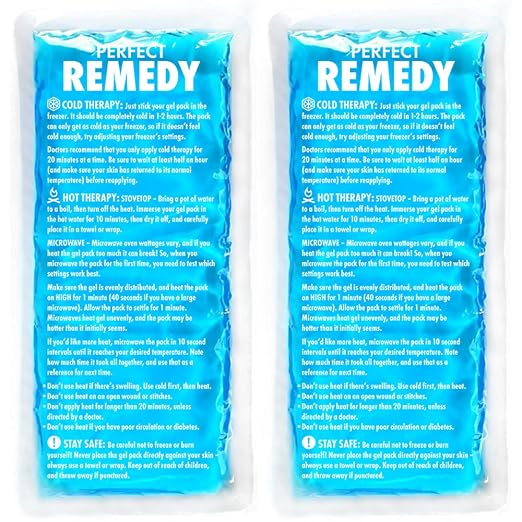
Gel Ice Packs for Injuries (2 Pack) – Soft Reusable Cold/Hot Compress for Injury, Pain Relief, Rehabilitation, Flexible Therapy for Knee, Shoulder, Back, Neck, Ankle


  • [50% MORE GEL] – Our packs contain significantly more gel than competing packs, so they stay colder longer! Cheap packs sold by competitors have just a thin layer of gel, but ours are thick, so you can continually apply soothing cold or heat. Each pack measures 11” x 5.5”, with an effective area of 10” x 4.5”
  • [STAYS COLDER LONGER] – Our gel is designed to stay colder much longer than competitors. Competing packs are warm after 10 minutes, but our proprietary gel stays ice cold!
  • [FLEXIBLE AND REUSABLE] We craft our packs from a sturdy, leak proof plastic, so they’re designed to be used over and over again. They’re also designed to remain soft and pliable when cold, so you can mold them to aches and pains on your body. Use them on your knee, ankle, shoulder, neck, head, jaw, elbow, wrist, or anywhere else you need an ice pack.
  • [USE BOTH HOT AND COLD] – Our packs can be used both for both cold and hot therapy, unlike competing packs that can only be used cold. Just stick them in the microwave, or the freezer!
  • [NO HASSLE 1-YEAR WARRANTY] – We stand behind our products 110%. If you ever have any issues, just get in touch and we’ll happily send a replacement or refund.

Friday, September 7, 2018

Price: $14.95 ($7.48 / Count) In Stock. Sold by Thrive Brand Products and Fulfilled by Amazon. Gift-wrap available. This item does not ship to Bangladesh. Please check other sellers who may ship internationally. Learn more Deliver to Bangladesh Qty: Turn on 1-click ordering Add to Cart Buy Now Add to List Share Facebook Twitter Pinterest 220+ Shares Ad feedback Gel Ice Cold Compress – (2 Pack) – Reusable comfortable soft touch vinyl provides instant pain relief, rehabilitation and therapy from injuries like shoulder, upper/lower back, knee,...

  • DESIGN – Crafted from durable nylon and vinyl fabric and filled with non-toxic gel. These gel cold compress ice packs are soft to the touch but durable enough to be used dozens of times. The packs gently provides soothing cold therapy and stay pliable during treatment. Won’t turn into an immovable hard brick like most standard ice packs. These gel cold pack each are 10.5 inches long X 4.75 inches wide and less than 1 inch think. Each weighs approximately 0.5 lbs. You will receive two!
  • VERSATILE – Great for use on nearly any body part, including: shoulder, upper / lower back, knee, elbow, cervical, wrist, rotator cuff, head, eye, perineal, ankle and foot. Useful for common conditions, including: wisdom teeth surgery, torn ACL / MCL, broken bone, fever, bruise, sprain, strain, hernia, plantar fasciitis, tendinitis and shin splints. Useful for a variety of sports athletes, including: football, soccer, running, gymnastics, swimming, golf, tennis, baseball and basketball.
  • PAIN RELIEF & THERAPY – Delivers up to 30 minutes of soothing cool relief for aches and pains between refreezing. Simply place the pack in the freezer between uses and it will be ready to use again in 20-30 minutes. Apply immediately after an injury to control swelling and inflammation of soft tissue. Provides instant pain relief, long term therapy and helps to manage muscle and joint swelling.
  • FREE FABRIC STORAGE BAG - The 2-pack of gel cold packs comes in a handy fabric storage bag. Made from durable polyester and featuring a drawstring closure. Store the cold packs in the freezer with this bag or use it for travel. This bonus storage bag is our gift to you!
  • TRUSTED – Cold Packs are recommended the most by Physical Therapists, Doctors, Sports Trainers and Chiropractors. Manufactured in a modern sterile FDA registered facility and sold by FDA registered US company that has been doing business for 40 years. Purchasing a Thrive Brand gel cold pack ensures a safe, sterile and regulated product. Every Thrive Brand product is backed by a no questions asked one-year warranty.

TAWA Insulin Cooler Travel Case Diabetic Medication Cooler with 2 Ice Pack

                                                               
Ace insulin ice pack
Product specifications 600ml can be mounted two insulin pen / injection
[Size] 20 * 8.6 * 4cm
Standard configuration [4] 50 g cold-agent core
It provides OEM, according to sample production.
product description
This product is mainly made of cloth and insulation ice bag, used refrigerated insulin for diabetics to carry out work, travel and outdoor recreation, sports, the product easy to operate, can be used repeatedly, cold storage time of up to 7 hours or so , diabetics ideal personal supplies.
The main structure, performance
Insulin cold pack consists of a small bag with a cold-agent core composition. Cold-agent core is developed from the use of high-tech green-type polymer storage and new materials, the internal cellular structure of the polymer polymerized at room temperature state was blue soft transparent gel-like, heat capacity of water is 2 to 3 times, with efficient cooling storage, regenerative thermal double effect; and can be used repeatedly, not bad, no water, easy to operate, non-irritating to human skin characteristics.
Instructions
1, the cold inner core agent insulin cold bag inside out, place the refrigerator freezing chamber refrigerator for 1 to 2 hours standby.
2, the use of insulin out into the cold pack sack can each cold cool 1 to 2 hours, can use repeatedly frozen.
3, the inner core cold agents usually can be stored in the refrigerator or freezer in storage at room temperature, will not degenerate.
Scope
Suitable for diabetics carry cold insulin injections.
Precautions
As cold-agent core of plastic packaging damaged, abandoned; can also be prepared by several other cold-agent within the core, the use of multiple exchange cold.